Water Mitigation & Restoration
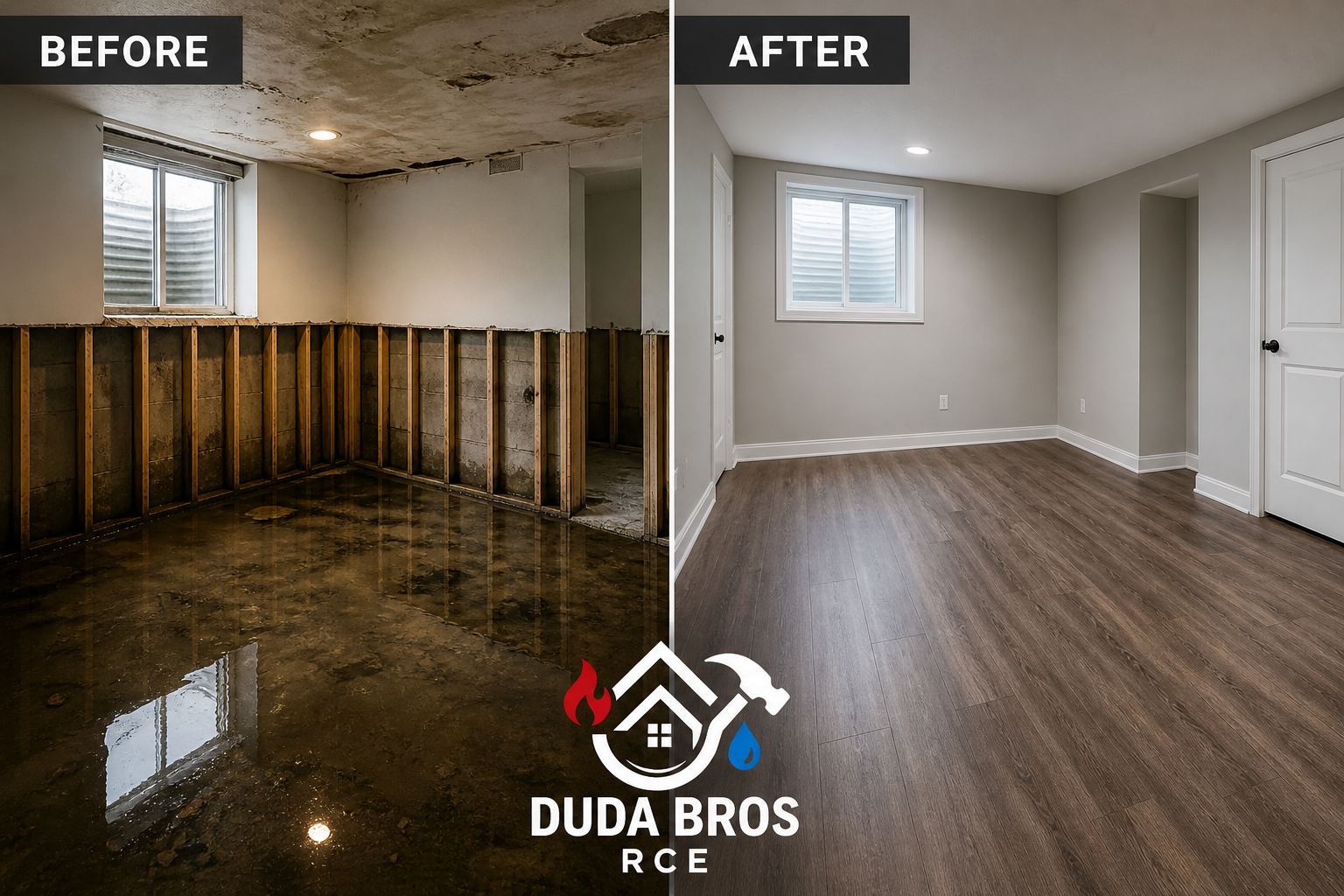
Water damage can occur suddenly from burst pipes, flooding, appliance leaks, roof damage, or sewer backups. If not addressed quickly, water can spread through walls, flooring, and structural materials, leading to serious damage and potential mold growth.
Water mitigation is the first and most critical step in the restoration process. It focuses on stopping the source of water, removing standing water, and drying the affected areas using professional equipment such as air movers and dehumidifiers. This process helps prevent further damage and protects the structure of the property.
Once the property is properly dried, restoration begins. Restoration involves repairing or replacing damaged materials such as drywall, flooring, insulation, and other structural components to return the property to its original condition.
At DUDA BROS RCE, we respond quickly to water damage emergencies and provide professional mitigation and restoration services to protect your property and restore your peace of mind.
Flood Damage Clean Up
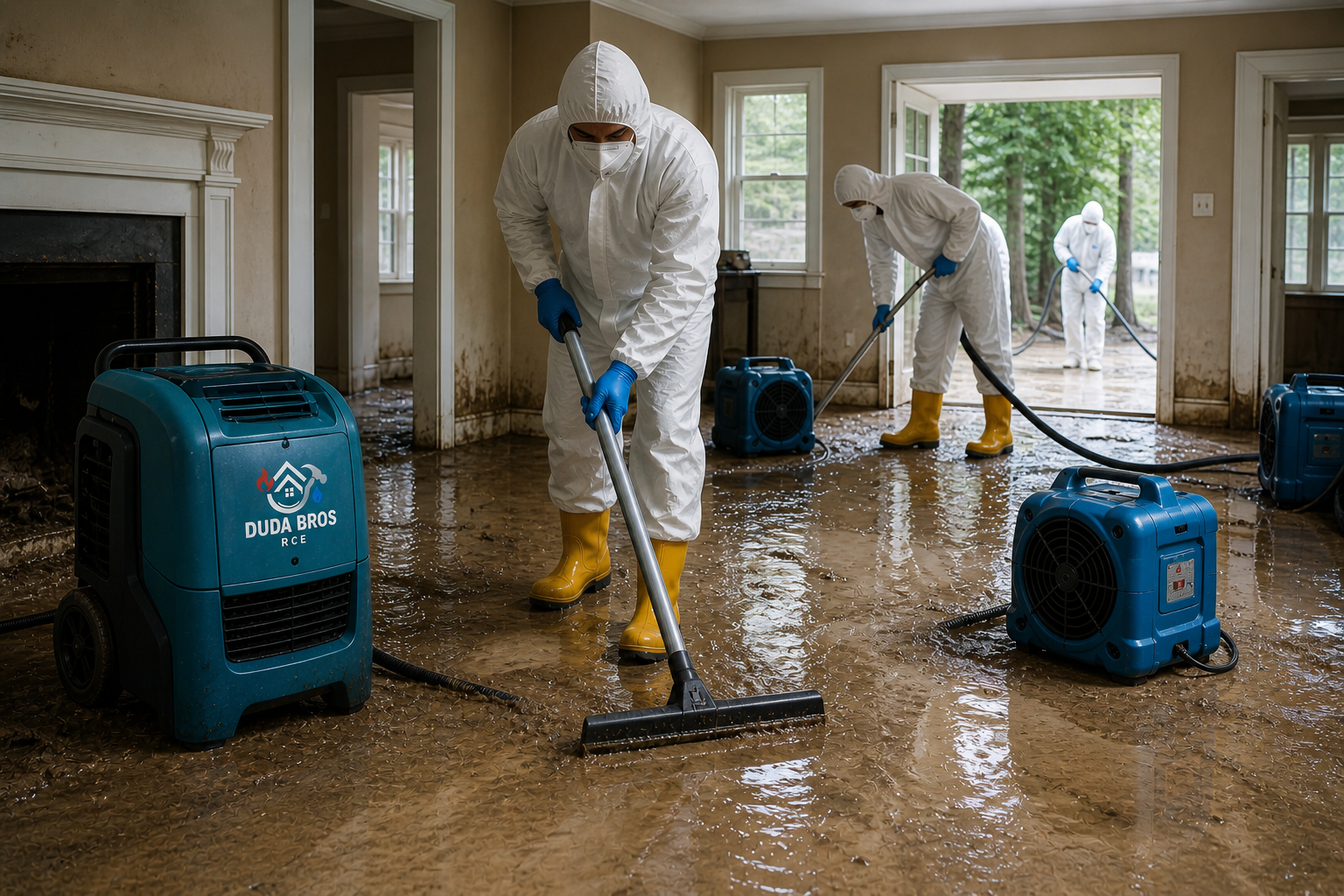
Flooding can cause serious damage to homes and businesses, often affecting flooring, walls, furniture, and structural materials. Whether caused by heavy rain, sewer backups, appliance failures, or plumbing issues, flood water can quickly spread and contaminate large areas of a property.
Flood damage clean up involves removing standing water, clearing debris, and thoroughly drying the affected areas to prevent further structural damage and mold growth. Using professional water extraction equipment, air movers, and dehumidifiers, the drying process helps restore safe moisture levels within the property.
At DUDA BROS RCE, we provide fast and reliable flood damage clean up services to help protect your property and begin the restoration process as quickly as possible. Our team works efficiently to remove water, dry the structure, and prepare the property for any necessary repairs.
Water Extraction
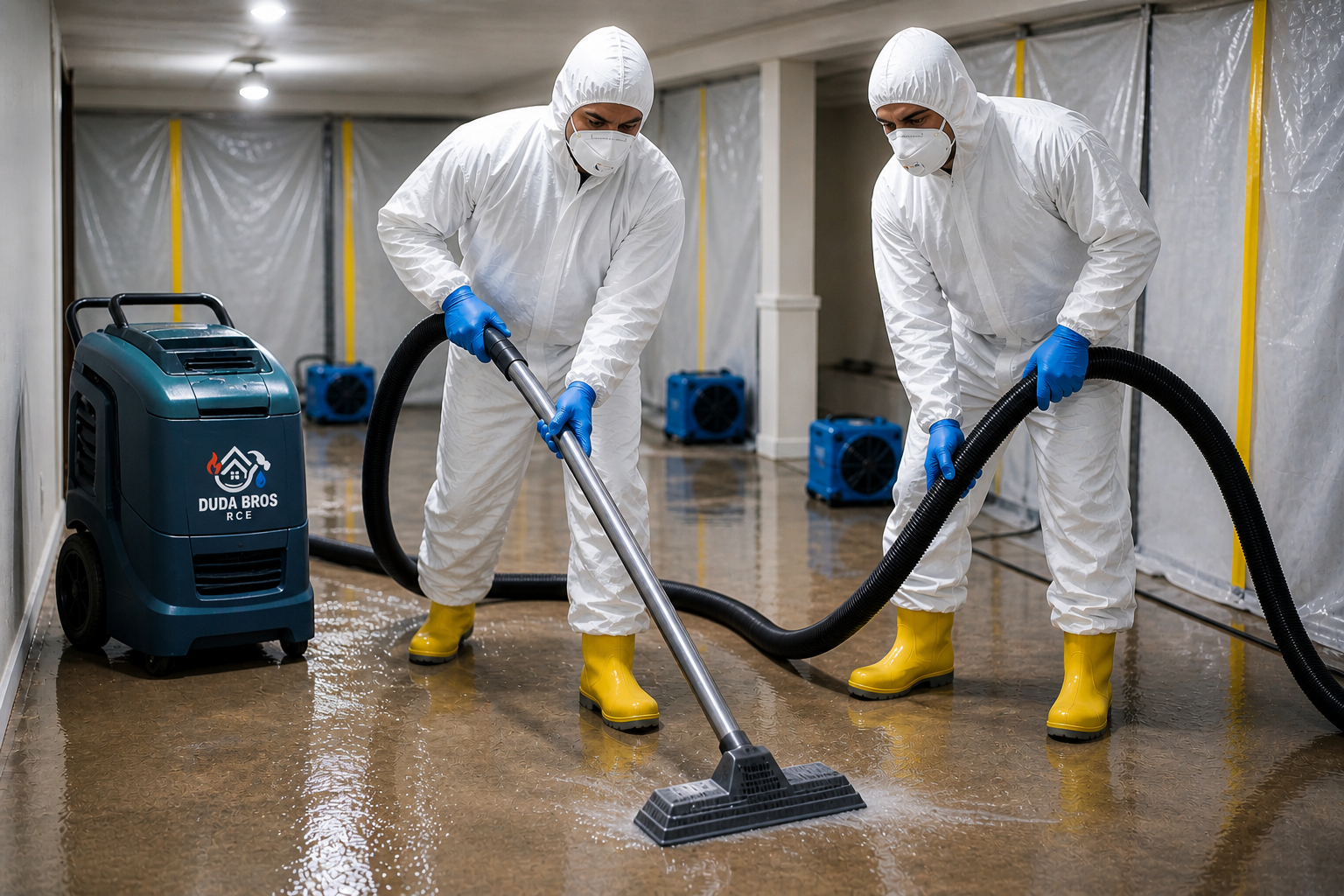
Water extraction is a critical step in the water damage restoration process. When excess water enters a property due to flooding, burst pipes, appliance leaks, or other plumbing issues, it must be removed quickly to prevent further structural damage and mold growth.
Water extraction involves the use of professional-grade pumps and high-powered extraction equipment to remove standing water from floors, carpets, and other affected areas. Removing the bulk of the water as quickly as possible helps reduce drying time and minimizes damage to building materials and personal property.
At DUDA BROS RCE, we provide fast and efficient water extraction services to help stabilize your property after water damage. Our team uses professional equipment to remove water safely and prepare the affected areas for the drying and restoration process.
Structural Drying
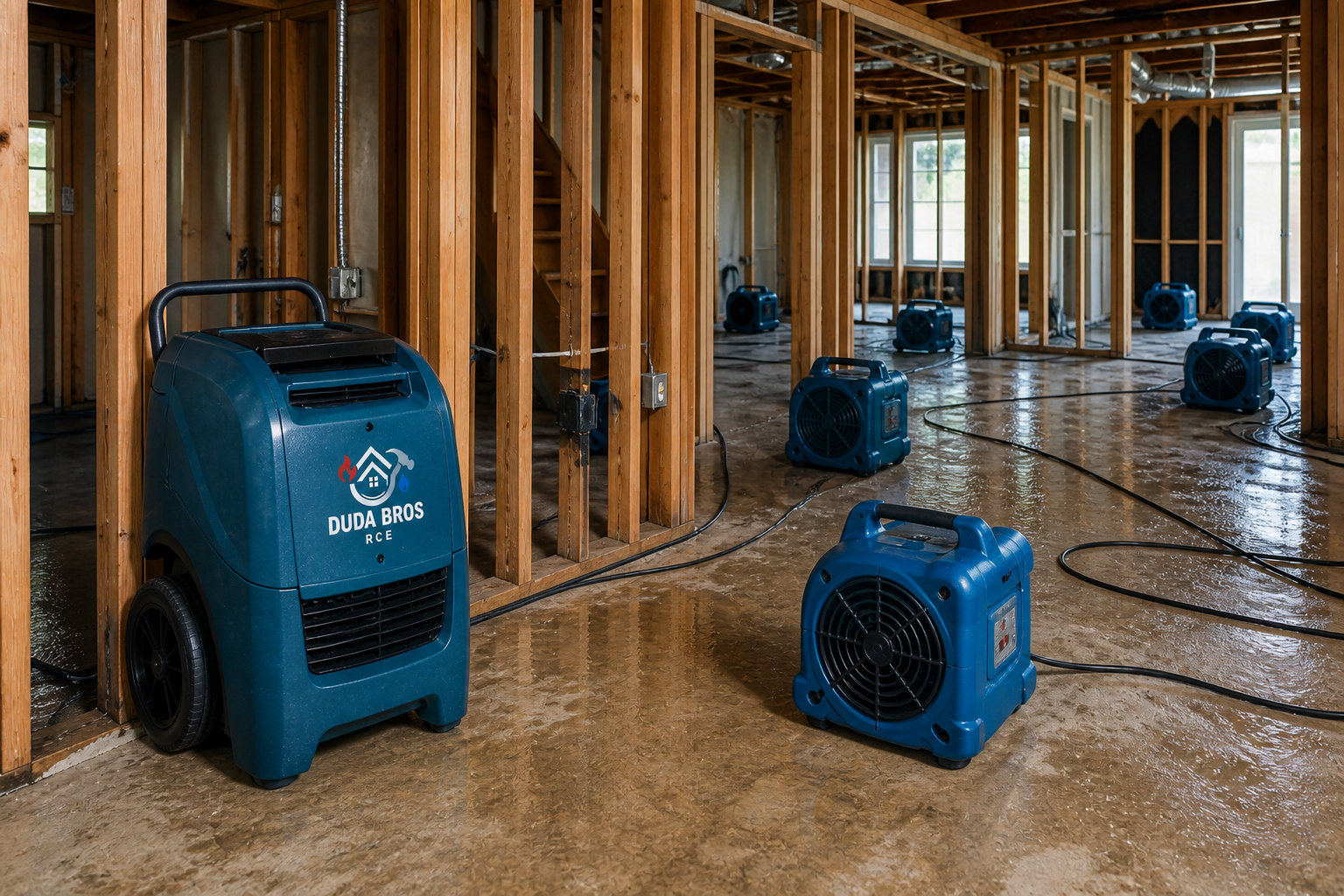
Structural drying is an essential part of the water damage restoration process. Even after standing water has been removed, moisture can remain trapped within walls, flooring, subfloors, and other structural materials. If not properly dried, this hidden moisture can lead to long-term damage, warping of materials, and mold growth.
Structural drying uses specialized equipment such as high-velocity air movers and commercial dehumidifiers to remove moisture from building materials and the surrounding air. This controlled drying process helps restore safe moisture levels and protects the structural integrity of the property.
At DUDA BROS RCE, we use professional drying equipment and moisture monitoring tools to ensure that affected areas are thoroughly dried. Our goal is to stabilize the structure, prevent further damage, and prepare the property for any necessary repairs or restoration work.
